Japanese Inn With an Elderly Parent: The Form That Gets a Straight Answer About Stairs, Baths and Beds
Written by a Japanese local. The form below was designed with an innkeeper who runs an eight-room inn; she read five drafts and told me, each time, what was wrong with them.
You want to take a parent who can't do stairs well to a ryokan — a traditional Japanese inn. The listing tells you nothing about stairs, steps, the bath, or what you sit on at dinner. You ask, and you get a polite reply that sounds fine and answers about half of it.
Below is a form you send instead of questions. The inn fills in the blanks and sends it back. Every Japanese sentence you send has an English translation beside it, so you know exactly what you've written — and the choices that come back (可 yes / 不可 no / 要相談 depends) carry their English with them. Anything the inn writes in its own words — the free-text blanks, and the note at the end — comes back in Japanese; put those through a translator.
Why a form
An innkeeper asked me to build this, and explained why questions don't work:
If these five questions become the standard, the same letter arrives dozens of times and it piles up on an eight-room inn. Give me one thing I fill in once. Then I walk round with a tape measure one time, write it out one time, and after that I just paste it.
You can't read the answer. Ask for a reply in Japanese — you should, because their Japanese is more precise than their English — and you paste it into a translator. The numbers survive; the words lie to you. Three that will end your trip while sounding fine:
- 和式 → "Japanese style." It means a squat toilet: a floor-level pan you lower yourself onto in a deep knee bend. If your parent can't kneel, this is a no.
- 座卓 → "low table." Not a coffee table. It means you sit on the floor — no chairs, no back support — for a two-hour dinner.
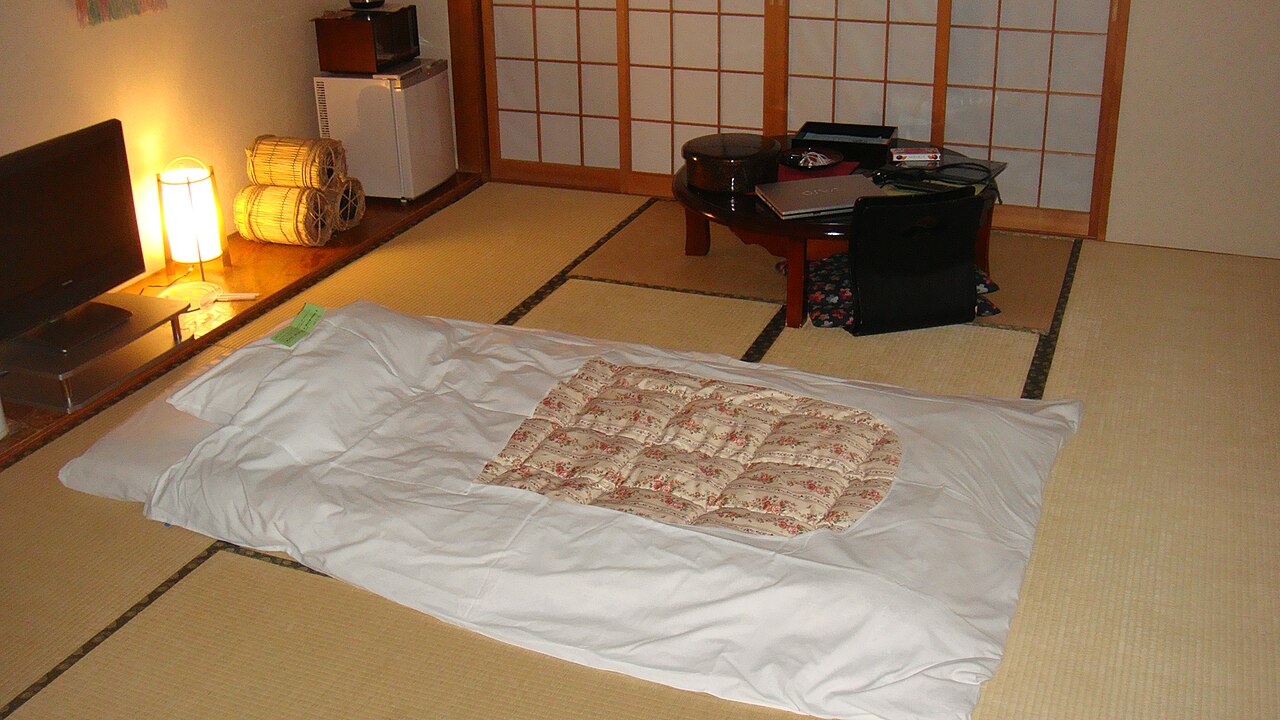
- お布団 → "futon." In American English a futon is furniture with a wooden frame. This is a three-inch pad laid directly on the floor. Getting down onto it and up off it, twice a day, is often the thing that decides the trip.
The question you don't get answered is the one that mattered. In her words:
If I skip one, it's the one I found hardest to write. Writing "20cm" when I've never measured it, and then someone falls — that's my number, in writing.
And questions that sound answerable aren't. "Is there a handrail?" — "Yes." True, and useless: hers is on one side only and it stops three steps from the bottom, which is exactly where a tired leg fails. The form asks which side, where it runs, and where the landing is.
Before you send it
Order of operations — pick one and stick to it. The inn's own website is the best channel: search the inn's name plus 公式 (official), then look for お問い合わせ (contact). Turn on your browser's page translation and both become findable. If the inn has no site, the booking platforms' guest-to-inn message functions are enabled by individual inns and usually only open after you've booked — so in that case: find a plan whose cancellation terms you have actually read, book it, message immediately, and cancel inside the window if the answers don't work. Don't do both, and don't hold rooms at two inns to compare — at an eight-room inn a held room is an eighth of the house.
On cancellation. Terms are set by each inn, not the platform, and Japan's model terms for ryokan have far more steps than the hotel version — running out to a month before arrival. Peak dates are stricter. Read the specific plan before you book anything.
Say what the person can do, not what they can't. "Limited mobility" invites an innkeeper to picture a wheelchair, and at a two-storey inn with steep stairs that reads as a booking to decline before anyone has looked at anything. The form's opening line does this for you — and it's translated below, so check it actually describes your companion.
The form
Copy everything inside the box. Fill the blanks marked _. The opening line and the booking line are examples — change them.
恐れ入ります。【お名前】と申します。【11月12日】から【2】泊【2】名で、【予約済みでございます・これから予約いたします】。予約番号は【 】です。
同行いたします母は【74】歳です。母は杖を使えば一人で歩けます。手すりがあれば、ゆっくりであれば階段の上り下りもできます。正座ができず、床に座ることもできません。車椅子は使用しておりません。
当日慌てないよう、下記を教えていただけますと幸いです。該当する語をお書きいただくか、箇条書きでご返信いただく形でも結構です。おおよそで、お分かりになる範囲で結構です。空欄のままでも構いません。
万一、実際と異なっておりましても、お宿にご迷惑をおかけすることはございません。安全につきましては、私どもの責任で判断いたします。 お教えいただいた内容を、クチコミサイトや第三者に転載することはいたしません。
What that says: Excuse me — my name is [name]. We'd like [2] nights from [12 November] for [2] people; [we have already booked / we're about to book]. Our reservation number is [ ]. My mother, travelling with me, is [74]. She can walk alone with a cane. If there's a handrail she can manage stairs, slowly, up and down, but she cannot kneel and cannot sit on the floor. She does not use a wheelchair. So that we aren't caught out on the day, we'd be grateful if you could tell us the following. Write in the answers that apply, or just reply in a list — whichever is easier. Rough figures are fine, only what you know, and blanks are fine. If anything turns out to be different from what you write, it will cause you no trouble at all — we take responsibility for the safety judgement ourselves. We will not repost what you tell us to review sites or to anyone else.
■ 建物のこと — 一度ご記入いただければ、今後のお問い合わせにもそのままお使いいただけます About the building — fill in once, reuse for any future enquiry
玄関 Entrance ・靴を脱ぐ段差 step up:約__cm(実測 measured / 目測 by eye) ・腰かけ a seat to sit on:あり yes / なし no ・つかまるもの something to hold:あり yes / なし no
お部屋と階段 Rooms and stairs ・棟 which buildings you have:本館 main / 新館 new wing / 別館 annexe ・エレベーター lift:あり yes / なし no ・1階の客室 guest rooms on the ground floor(=Japanese 1階):__室 rooms ・2階へ上る階段 stairs up to 2階(one flight up):__段 steps ・踊り場 landing:なし none / __段目にあり at step __ ・傾斜 steepness(ご印象で結構です — your impression is fine):ゆるやか gentle / 普通 average / 急 steep ・手すり handrail(上るとき going up):右 right / 左 left / 両側 both / なし none ・手すりのある範囲 where the handrail runs:上から下まで the full length / 下から__段目から(その段を含む)from step __ up, that step included / その他(__)
お手洗い Toilets(各階ごとにお書きください — one line per floor) _階:洋式_か所 Western / 和式_か所 squat / 手すり handrail:あり yes・なし no _階:洋式_か所 Western / 和式_か所 squat / 手すり handrail:あり yes・なし no ・客室内のお手洗い toilet inside the room:あり yes(洋式 Western / 和式 squat)/ なし no ・夜間の廊下の足元灯 night lighting in the corridor:あり yes / なし no
お風呂 Bath ・お風呂の場所 where:本館内 in the main building / 別棟 separate building ・別棟の場合、屋外を通りますか do you go outside to reach it:はい yes / いいえ no ・お部屋からお風呂まで、階段を区間ごとにお書きください room to bath — one line per flight 1つ目 first flight:_段 steps(行きは 下り down・上り up)/手すり handrail:あり yes・なし no 2つ目 second flight:_段 steps(行きは 下り down・上り up)/手すり handrail:あり yes・なし no ・洗い場の椅子の高さ washing stool height:約__cm(実測 / 目測) ・洗い場の手すり handrail in the washing area:あり yes / なし no ・脱衣所の椅子 seat in the changing room:あり yes / なし no ・浴槽をまたぐ高さ height to step over into the tub:約__cm(実測 / 目測) ・貸切風呂 private bookable bath:あり yes / なし no (ある場合 if yes — 料金_円 fee / ご予約 booking:事前 in advance・当日 on the day / そこまで階段_段 steps) ・脱衣所まで付き添う a companion coming as far as the changing room:可 yes / 不可 no / 要相談 depends ・浴室内まで付き添う a companion coming into the bathing area itself:可 yes / 不可 no / 要相談 depends ・入浴着の着用(こちらで持参いたします)the guest wearing a bathing garment she brings herself:可 yes / 不可 no / 要相談 depends ・入浴可能時間 bathing hours:_時~_時 ・男女入替 does the bath swap between men's and women's:あり yes(_時に交代 at _)/ なし no
お食事 Meals ・場所 where:広間 tatami hall / 食事処 dining room / お部屋 in the room / その他(__) ・お席の形式 seating:椅子とテーブル chairs and a table / 掘りごたつ a recessed well so your legs hang down / 座卓(床に座ります)low table, sitting on the floor ・椅子の背もたれ backs on the chairs:あり yes / なし no ・お食事処までの階段 stairs to the dining area:1階のお部屋から_段 / 2階のお部屋から_段
夜間・送迎 At night, and pickup ・夜間、館内にどなたかおられますか is anyone in the building overnight:はい yes / いいえ no ・夜間のお呼び出し方法 how to reach you at night:客室の電話 room phone / 呼び鈴 a bell / その他(__) ・呼び鈴の場所 where the bell is:_階の(____)on floor _, at the (front desk 帳場・entrance 玄関・other) ・玄関の施錠時刻 front door locked at:_時 ・施錠後の出入り in and out after that:可(鍵をお渡しします)yes, with a key / 不可 no ・最寄り駅からのお迎え pickup from the nearest station:可 yes / 不可 no / 要相談 depends (可の場合 if yes — ご予約:要 booking needed / 不要 not needed / 対応時間 hours:_時~_時)
お部屋の種類 Room types ・和洋室(畳とベッド)tatami room with beds:あり yes / なし no
お写真 A photo — メールをお使いいただける場合のみで結構です。階段を下から見上げたお写真と、玄関のお写真を1枚ずついただけますと、どんな数字よりも助かります。すでにサイトに該当のお写真があれば、その旨で結構です。 Only if you can use email. One photo of the staircase taken from the bottom looking up, and one of the entrance, tells us more than any measurement. If you already have suitable photos on your listing, just say so.
その他、この建物について気になる点があればお書きください Anything else about the building we should know ( )
■ このご予約のこと — この欄だけ毎回変わります About this booking — this section changes each time
・お部屋の階 our room's floor:_階(棟 building:__) ・お部屋の寝具 bedding:ベッド a bed(高さ約_cm height)/ お布団(床に敷きます)a futon laid on the floor ・夕食のお時間 dinner time:_時(他にお選びいただける時間 other sittings:_時)
もしご都合がつけば — 各行に 可・不可・要相談 とお書きください If any of these are possible — please write 可 (yes), 不可 (no) or 要相談 (depends) beside each line ・1階のお部屋にしていただく a ground-floor room : ・お荷物をお部屋までお運びいただく our bags carried up : ・階段の上り下りにお付き添いいただく an arm on the stairs : ・早いお時間のお食事にしていただく the earlier dinner sitting : ・お布団を先に敷いておいていただく bedding laid out before we arrive : ・洗い場に高さのある椅子をお出しいただく a taller stool in the washing area : ・玄関に腰かけをお出しいただく a seat at the entrance step : ・お食事を椅子とテーブルの席にしていただく a table with chairs at dinner : ・お食事の量を少なめにしていただく smaller portions :
私どもの場合について、率直にお聞かせいただけますと幸いです Anything you'd honestly want to tell us about our specific situation ( )
お忙しいところ恐れ入りますが、どうぞよろしくお願いいたします。【お名前】
(この用紙の出どころ this form comes from:genchijapan.com/ryokan-elderly-parent)
The last two lines say: Thank you for your time, and apologies for the trouble. [Your name].
Reading what comes back
Anchors, and where they come from. Japan's design guidance for housing where older people live — not inns, but the only national numbers that exist for these things — recommends an entrance step of 110mm (about 4.5in), relaxed to 180mm (7in) where the entrance is at ground level, or 360mm (14in) if there's an intermediate tread. It also names a handrail at the entrance specifically for stepping up and putting shoes on and off, and handrails in the bathroom for getting in and out of the tub, standing up inside it, and standing up in the washing area (MLIT Notification 1301 of 2001, §2(2)–(3)). Older inns can be well outside all of it — a 20–30cm (8–12in) entrance step is common.
- The washing stool. Retailers classify bath stools as roughly 20cm (8in) low, 25–30cm (10–12in) standard, 35–40cm (14–16in) high; the taller ones are what's sold for older users. (That's a retail classification, not a public standard.) Standing up from a low stool, wet, with nothing to hold, is the real obstacle in a Japanese bath.
- The stairs. Count the flights she'd actually do: bath, bed, the toilet at 3am, breakfast — call it four crossings a day, over however many nights. "Steep" from someone who climbs them daily means steep.
- Where the handrail stops matters more than whether there is one. A rail that begins three steps up leaves the tired part of the climb unsupported.
- The bedding. If it's お布団 and she can't get up from floor level, that ends it whatever the stairs say — unless they have a 和洋室, which the form now asks about directly.
- The bath, and who can actually help. The large bath is communal, nude and separated by sex, so if your companion is a different sex from you, you cannot go in at all. Read these three lines together: 「脱衣所まで付き添う」, 「浴室内まで付き添う」, and 「貸切風呂」. The commonest real answer is 脱衣所まで 可・浴室内まで 不可(or 要相談) — you can help with undressing and dressing, and not with standing up from a low stool on wet tile. If 「貸切風呂:なし」 as well, then everything between undressing and coming back out, she does alone. Whether that works is your call, not the inn's.
- Blanks are information. A blank step height means she hasn't measured it. Ask once more, on its own, and say again that rough is fine.
- Floors. Japanese 2階 = one flight up = American "second floor." The form says 1階/2階 throughout for this reason.
- 「その日の状況によります」 — it depends how the day goes — is literal, not a refusal. Room allocation at a small inn is often settled the day before.
- 「ご相談ください」 — do talk to us about it — is usually an opening rather than a brush-off, though it can also be a soft deferral. Take it as ask me again closer to the time.
- If they volunteer a drawback — "the stairs are quite steep, so if you're at all worried, do think it over" — take it at face value. Someone who climbs those stairs daily has told you she thinks they're dangerous for your parent.
- If they ask you to phone, it's usually not a brush-off — at a two-person inn the phone may be the only channel anyone runs.
Whatever you decide, write back
If it doesn't work — cancel it yourself first if you'd booked, then send this, and name the answer that decided it:
ご丁寧にお教えいただき、ありがとうございました。お風呂までの12段が母には難しく、今回は見送らせていただきます。【ご予約はキャンセルの手続きを済ませました。】お手数をおかけしました。またご縁がありましたら、ぜひ伺いたく存じます。【お名前】
Thank you for explaining so carefully. The twelve steps to the bath are too much for my mother, so we'll pass this time. [I have cancelled the booking. — delete this sentence if you hadn't booked] Sorry for the trouble. I hope to visit if the chance comes again. [Your name].
"Thinking of my mother's knees" tells me nothing, she said. "The twelve steps to the bath" means I write that line first, every time, from now on.
If it does work, send this afterwards — and note the last sentence, which is the part that matters:
先日はご丁寧にお教えいただき、ありがとうございました。階段の段数まで正確にお教えいただいたおかげで、母も安心して過ごすことができました。同じようにご心配な方のために、いただいたご説明をそのまま公開していただければと存じます。【お名前】
Thank you for explaining things so carefully before our stay. Knowing even the number of stairs meant my mother could relax. Please do publish what you told us, as it is, for other people with the same worry. [Your name].
That last sentence is your permission. Without it an innkeeper has no way of knowing whether writing "steep stairs, no lift" in public is welcome or damaging.
This page is about asking before you book. If you have already been refused a room, a separate page sets out what Japanese law and the health ministry actually say — statute and ministry text only, no advice.
I'm a Japanese writer, not a lawyer and not an access consultant. A filled-in sheet tells you what a building is, not whether it is safe for a particular person — that judgement is yours, and travel insurance is worth having. Two things on this page are documented and linked: Japan's design guidance for housing where older people live, and the tourism agency's model accommodation terms. Everything else — the readings of Japanese replies, the practical advice, and the claims about what small inns can and can't do — is my own judgement, not documented fact. It was shaped by one innkeeper who read five drafts; one innkeeper is not a survey, and other inns are laid out differently. Cancellation terms come from the tourism agency's model accommodation terms (ryokan schedule, Appendix 2). Every source is in Japanese, which makes checking me harder than it should be. Last updated 2026-08-27.
Suggest the next place — or make this page better
Spotted something outdated? Know a place I should cover? Tell me below — it opens right here, no account needed. Every report is verified before publishing.