If a Japanese Inn Refuses You a Room: What the Statute and the Ministry Actually Say
A reference page — Japanese statute text and ministry guidance, quoted. Written by a Japanese local. Compiled 2026-08-27.
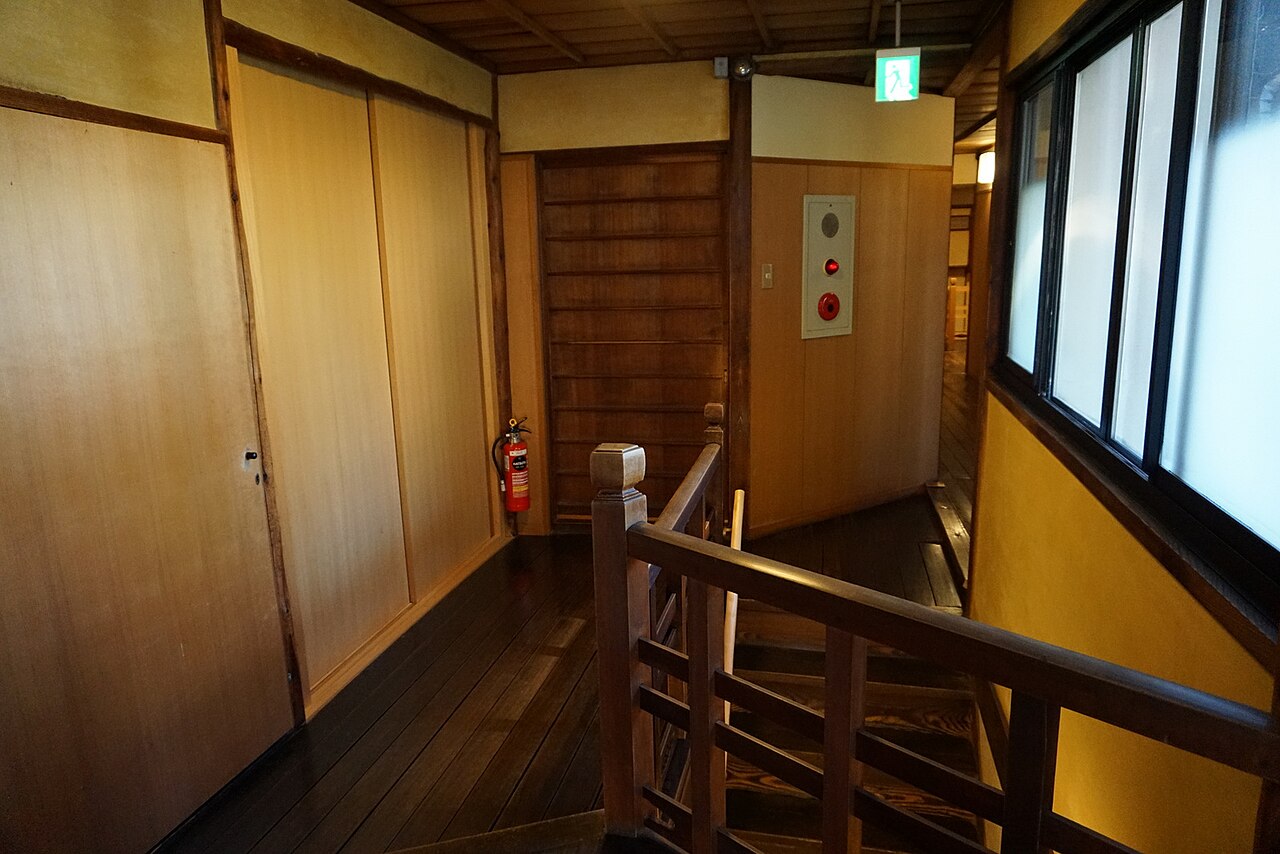
The short version, if you have just been refused. If the reason you were given was that the building has a lot of stairs and steps and would be dangerous, or that it's a ryokan, it's tatami — both of those wordings appear on the health ministry's own published list of examples of unfair discriminatory treatment. The first is listed as a refusal made without checking the guest's individual circumstances; the second appears in a guide-dog case. Neither appears among the grounds for refusal set out in the Hotel Business Act. The sources for that are quoted in full below.
That is a statement about what the ministry has published. It is not advice about what to do next, and this page does not give any — where the sources answer a question, the answer is here; where they don't, I say so rather than fill the gap.
Terms used below: a ryokan is a traditional Japanese inn. Tatami is the floor of a traditional room — thick mats faced with woven grass, which mark and tear easily; that is why a covering, or an animal's claws, comes up at all. A large bath (大浴場) is a communal bathing room, used undressed and separated by sex. An 入浴着 is a garment that covers the chest, worn by people who would rather not bathe fully undressed. MHLW is the Ministry of Health, Labour and Welfare, which regulates accommodation businesses.
The statute
The Hotel Business Act (旅館業法), Art. 5 ¶1 — Act No. 138 of 1948, e-Gov[EN]:
営業者は、次の各号のいずれかに該当する場合を除いては、宿泊を拒んではならない。
An operator must not refuse accommodation except where one of the following applies:
- the person is a patient etc. of a specified infectious disease;
- the person is likely to gamble, commit other illegal acts, or behave in a way that offends public morals;
- the person has repeatedly made demands, defined by ministerial ordinance, whose burden is excessive and would markedly obstruct service to other guests;
- 「宿泊施設に余裕がないときその他都道府県が条例で定める事由があるとき」 — the inn does not have room, or a ground applies that the prefecture has set by ordinance. MHLW notes that this 「必ずしも満室の場合だけを指すものではなく」 — does not necessarily mean only that the inn is fully booked — and includes cases where the business is suspended or scaled back (booklet p.13).
Note the fourth carefully. It is not a closed list: prefectures can add grounds by ordinance, so the exact set varies by where you are.
Art. 5 ¶2 requires the operator to see to it that accommodation is not refused thoughtlessly (「みだりに宿泊を拒むことがないように」), and, when refusing, to judge against objective facts whether one of those grounds applies, and to be able to explain the reason when the guest asks:
みだりに宿泊を拒むことがないようにするとともに、宿泊を拒む場合には、前項各号のいずれかに該当するかどうかを客観的な事実に基づいて判断し、及び宿泊しようとする者からの求めに応じてその理由を丁寧に説明することができるようにするものとする。
The Enforcement Regulation carves something out of ground 3. The demands that count as excessive exclude 「宿泊に関して障害を理由とする差別の解消の推進に関する法律第二条第二号に規定する社会的障壁の除去を求める場合を除く」 — except where what is sought is the removal of a social barrier as defined in the disability-discrimination Act (Enforcement Regulation Art. 5-6(i), e-Gov[EN]).
What MHLW has published about it
From the ministry's training booklet for operators, "The Hotel Business Act changes from 13 December 2023" (PDF):
- A ground the inn writes into its own terms and conditions is void if it isn't in Art. 5 ¶1, and refusing on it breaks the Act (p.14).
- On disability specifically (p.16):
旅館業法第5条においては、宿泊を拒むことができる事由として障害があることは規定されていないため、営業者は、障害があることを理由として宿泊を拒むことは当然できません
Since disability is not among the grounds for refusal in Art. 5, an operator plainly cannot refuse on that basis. - Refusing solely because the guest did not declare a disability in advance breaches Art. 5 ¶1 and is discriminatory treatment (p.16). An inn may ask you to tell them in advance so it can prepare; it cannot make that a condition of your admission. - Safety can be a legitimate reason, but a vague one is not. The booklet says a safety concern can be one of the legitimate reasons under the disability-discrimination Act, while adding that whether it really is legitimate calls for careful judgement. It then says that refusing without considering the type and degree of the person's disability or the actual risk does not fall under that ground and is discriminatory treatment (p.17).
From the ministry's guideline on the same provisions (PDF):
- Asking repeatedly is protected. Even where a guest, through constructive dialogue, repeatedly seeks the removal of a social barrier, that "of course does not" fall under refusal ground 3 (p.26).
- The first step the ministry describes, where an inn cannot meet a demand of the kind covered by Enforcement Regulation Art. 5-6, is to explain 「そうした要求には応じられないが、宿泊自体は受け入れること」 — we can't meet that demand, but we will still take you as a guest. The same sentence continues: 「当該説明を行ってもなお、当該要求を求められる場合は、宿泊を拒むことができる」 — if the demand is still pressed after that explanation, accommodation may be refused (p.26–27).
- Where the guest never applied, or withdrew the application. The ministry's position is that it is not a refusal of accommodation where, before a booking contract is formed, 「まだ宿泊しようとする者からの宿泊の申込みがなされないままやりとりを終えたとき又は宿泊しようとする者からの宿泊の申込みが撤回されたとき」 — the exchange ended without the guest having made an application, or the guest withdrew it (p.37). Note what that does not cover: an application that was made and turned down. And note that this is about the Hotel Business Act only — the guide-dog example in the next section was a pre-booking enquiry, and it appears on the ministry's list of unfair discriminatory treatment.
The two lists
MHLW's leaflet for accommodation operators sets out worked examples on both sides (PDF, p.2). The headings matter: the first list is "examples considered to be unfair discriminatory treatment where there is no legitimate reason", and the page notes these are illustrations, not an exhaustive set. It also states that where a legitimate reason objectively exists, an act may not amount to unfair discriminatory treatment.
Listed as likely unlawful discrimination:
- Refusing a disabled guest's booking without checking their individual circumstances, on the grounds that the building "has a lot of stairs and steps, so it would be dangerous."
- Refusing a guest accompanied by a guide dog on the grounds that "it's a ryokan, it's tatami." There is also a statute directly on this: the Act on Assistance Dogs for Physically Disabled Persons, Art. 9 provides that a person managing a facility used by an unspecified and large number of people 「身体障害者補助犬を同伴することを拒んではならない」 — must not refuse the accompaniment of an assistance dog — 「ただし、…著しい損害が発生し…その他のやむを得ない理由がある場合は、この限りでない」, except where serious harm would arise or there is another unavoidable reason (Act No. 49 of 2002, e-Gov[EN]).
- Attaching a condition that a disabled group's booking include non-disabled members.
- A booking-site listing stating that wheelchair users should refrain from using the large bath.
- Refusing accommodation when a guest sought to bring in a ventilator, on the grounds that "we have never handled that before."
- Refusing to let a breast cancer patient bathe wearing a bathing garment (入浴着).
Listed as not unfair discriminatory treatment — the heading is 「正当な理由があり、不当な差別的取扱いに該当しない例」, examples where there is a legitimate reason:
- Confirming the guest's situation, within the range needed to provide reasonable adjustments, with attention to privacy.
- Where a guest uses a wheelchair or similar, severe steps exist, and staff assistance still would not make the building navigable — introducing them to a room they can stay in, or to another inn.
- Where a wheelchair user wants a tatami room, laying a covering down to protect the room's fabric.
- Asking for a companion where lengthy hands-on assistance at meals or the toilet would be needed, that being outside staff's normal duties.
The other law, and its limits
Providing reasonable adjustments (合理的配慮) became a legal duty for private businesses on 1 April 2024. The duty is bounded by "undue burden," which the ministry says is judged case by case on: the effect on the business, feasibility, cost and burden, the size of the business, and its financial position (leaflet p.1). The framework it sets out for getting there is 建設的対話 — constructive dialogue: the guest and the business talk it through and look for a workable alternative.
Two limits worth knowing:
- The duty is triggered by the guest expressing a need for a social barrier to be removed (leaflet p.3). It is not automatic.
- The disability-discrimination Act defines a disabled person as someone restricted 継続的に — on a continuing basis (Art. 2(i), e-Gov[EN]). Whether a temporary condition — a post-surgical boot, a healing fracture — falls inside it is not something I found addressed in official guidance. Hotel Business Act Art. 5, by contrast, protects 「宿泊しようとする者」 — a person seeking accommodation — with no status requirement at all.
What sits behind Art. 5
- Prefectural governors may require reports and send inspectors into the premises (Art. 7).
- They may revoke the licence, or suspend the business for up to one year, for a breach of the Act (Art. 8).
- A breach of Art. 5 ¶1 is punishable by a fine of up to ¥500,000 (Art. 11, item (i)).
All in the statute text[EN]; MHLW sets out the chain at booklet p.18.
Keep the two laws apart. The lists above come from the disability-discrimination Act and are about whether an act counts as unfair discriminatory treatment. The four grounds for refusal are in the Hotel Business Act. The leaflet does not say that something on its second list is also a lawful ground for refusal under Art. 5 — and the ministry's booklet points the other way, stating that refusing on vague safety grounds, without considering the type and degree of the person's disability or the actual risk, does not amount to 「宿泊施設に余裕がないとき」 either (p.17). How the two fit together in a particular case is not something I found set out in the guidance, and I am not going to guess at it.
If you need to ask someone in Japan
The licensing and inspection authority for an inn is the prefecture, in practice through the local public health centre (保健所).
Separately on this site, and about a different moment — before you book rather than after a refusal — there is a bilingual form for asking an inn what its building actually is: stairs, steps, the bath, what you sit on at dinner.
For consumer advice in English while you are in Japan, the Consumer Hotline for Tourists, run by the National Consumer Affairs Center: 03-5449-0906, weekdays 10:00–12:00 and 13:00–16:00, in English, Chinese, Korean, Thai, Vietnamese, French and Japanese (official site[EN]).
I'm a Japanese writer, not a lawyer, and this is not legal advice. Everything above is either statute text or ministry-published guidance, quoted and linked so you can check it; where I could not find something addressed in official guidance, I have said so rather than filled the gap. This page deliberately stops at what the sources say and does not advise you on how to behave. Every source is in Japanese, which makes checking me harder than it should be. Last updated 2026-08-27.
Sources: Hotel Business Act (旅館業法), Act No. 138 of 1948 — Arts. 5, 7, 8, 11 (e-Gov)[EN] · Hotel Business Act Enforcement Regulation Art. 5-6 (e-Gov)[EN] · Act on Eliminating Discrimination against Persons with Disabilities, Act No. 65 of 2013 (e-Gov)[EN] · Act on Assistance Dogs for Physically Disabled Persons, Act No. 49 of 2002 — Art. 9 (e-Gov)[EN] · MHLW training booklet on the revised Hotel Business Act (PDF) · MHLW guideline on refusal limits and discrimination prevention (PDF) · MHLW leaflet for accommodation operators (PDF) · Consumer Hotline for Tourists[EN].
Suggest the next place — or make this page better
Spotted something outdated? Know a place I should cover? Tell me below — it opens right here, no account needed. Every report is verified before publishing.