Japan Tax-Free Shopping from November 1, 2026: You Pay the Tax, the Shop Refunds It
Japan Logic — country-wide honne. Data collected 2026-08-23. Reviewed 2026-08-23.
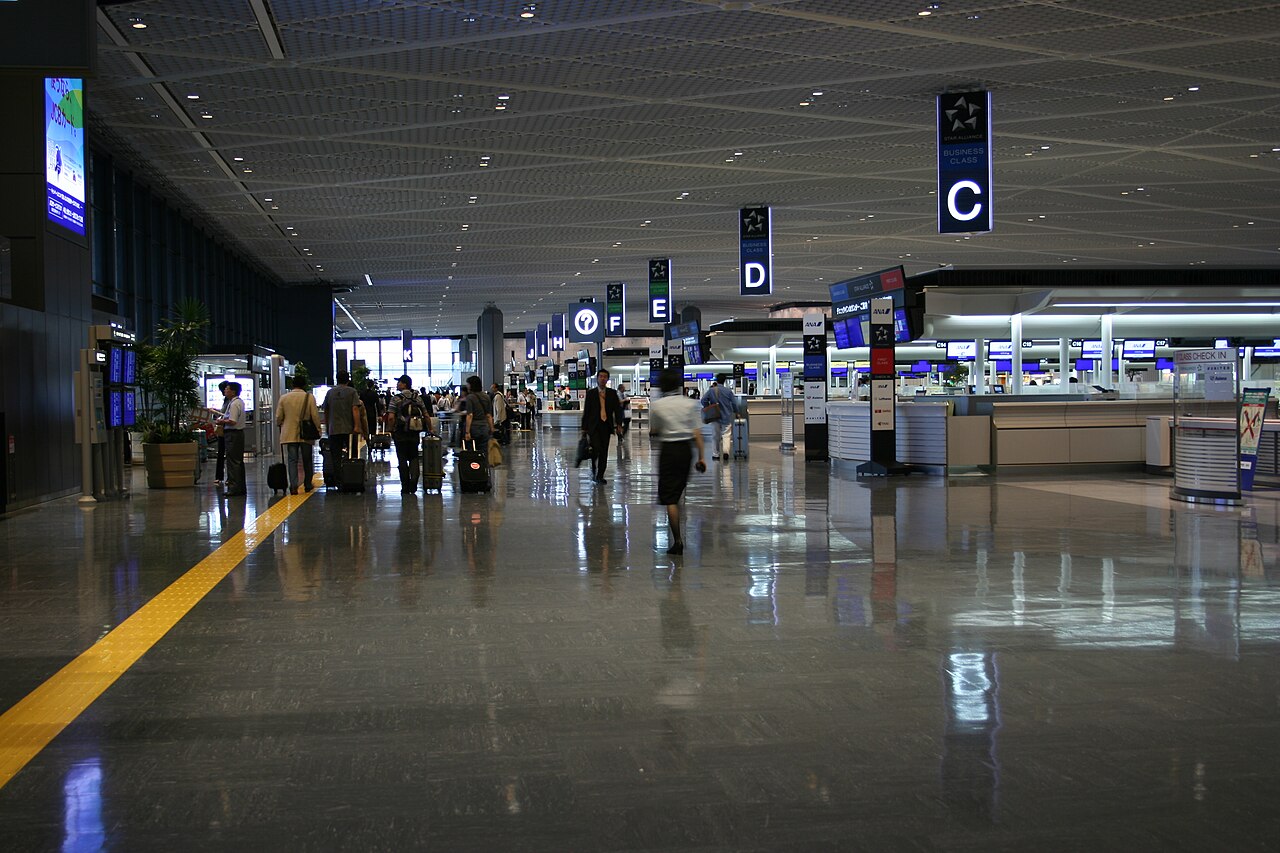
Terms, for first-timers — read this first: Japan's sales tax is consumption tax (消費税): 10% on most things, 8% on food and non-alcoholic drink you take away — alcohol and eating in a restaurant are 10% (National Tax Agency, reduced rate, JA[EN]). Price tags in Japan show the tax-inclusive price, but the rules below are written in tax-exclusive amounts, so we give both. A tax-free shop (免税店) is a shop licensed by the tax office to sell to visitors without the tax; you'll see "Tax-Free" signs at drugstores, electronics chains and department stores. This is not the same thing as the duty-free shops after security at the airport, which are a separate system this article doesn't cover. Customs (税関) is the agency that checks what leaves and enters the country — a different desk from immigration. Bag drop is where you hand your suitcase over at the airline counter; everything in this article happens before that. Visit Japan Web (VJW) is the government's site for doing entry paperwork online. And the two words in our section headings: tatemae is the official face of a thing, honne is what people actually think of it.
The 30-second version. From November 1, 2026 you pay the full tax-inclusive price at the shop, register how you want to be refunded, and keep your receipt. At the airport, before you check in and drop your bags, you take your purchases to a tax-free terminal in the departure hall and show your passport. Customs confirms your goods are leaving — that's all the airport does. The money comes later, from the shop or the refund company it hired. Ask at the register how and when.
🧩 THE PUZZLE
The headline is everywhere: from November 1, 2026, Japan stops taking the tax off at the register. You pay the full price, and the tax comes back when you leave.
Then the real questions start, and the English internet goes quiet. Where exactly do I do this — before or after I check my suitcase? What about the 1.8-litre bottle of sake that can't go in my carry-on? I ate the snacks. Do I get cash, a card refund, or nothing? And who is actually handing me the money?
Every one has an answer, and almost all of them sit on two Japanese government pages. The most important one is a single sentence the English write-ups don't carry, because it makes the whole thing sound less tidy than "get your refund at the airport."
📜 THE TATEMAE — what the rules actually say
Who this applies to
Not simply "anyone with a foreign passport." The rules cover non-residents — visitors staying on a short-stay, diplomatic or official status — and also Japanese nationals who have lived abroad continuously for two years or more, who from November can prove it with a My Number Card as well as the documents accepted until now (NTA Q&A, overview edition, Q3, PDF; JTA leaflet, EN, PDF). A foreigner living in Japan does not qualify; a Japanese citizen based overseas may.
At the shop — the half nobody writes about
The queues at drugstore tax-free counters are not created by the refund. They're created by this, and from November there is one more step in it:
- You show your passport and the shop sends a purchase record to the tax agency's system electronically. That record — not your paper receipt — is what the airport terminal reads later (NTA Q&A overview).
- You pay the full tax-inclusive price. Nothing comes off at the till any more.
- You register how you want the money back — the government's own flow diagram calls this "set up your refund method" (JTA leaflet, EN, PDF). In the joint government planning material, the options are a card refund (Visa, Mastercard, JCB, AMEX and UnionPay were listed as workable as of March 2024), an e-money account (Alipay, WeChat Pay), a bank transfer, or cash at the airport; card and e-money refunds are the ones designed to arrive automatically once customs confirms (MOF/NTA/METI/JTA joint material, August 2024, PDF, JA — planning-stage document, see the note in THE WHY).
- The clerk tells you three things, and has to. Shops are legally required to explain that you must present your passport and be able to present the goods at departure within 90 days; that goods confirmed by customs must actually be exported, or the tax is collected and penalties apply; and that the customs check has to happen before your bags go into the hold. It sounds like a script because it is one. The third point is the one that will cost you money.
Two things about the ¥5,000 minimum that shop staff deal with all day:
- It's ¥5,000 tax-exclusive per shop per day — about ¥5,500 on the price tag (¥5,400 for food and non-alcoholic drink at 8%). Buying "¥5,000 worth" by the sticker price is the single most common way to miss the threshold.
- In department stores and malls, a tax-free counter can add up purchases from several shops on the same day to reach the ¥5,000 line, and from November those shops no longer have to sit inside the same complex (NTA Q&A overview, Q24-2).
At the airport
| Question | The rule | Source |
|---|---|---|
| Where, exactly? | At tax-free terminals in the international departure hall, before you check in and drop your bags. You need every item with you. Once your suitcase is checked in the procedure is closed to you, and the airline will not bring a checked bag back out for it. | JTA traveler page, JA[EN] |
| Will they search my luggage? | Usually not. You show your passport at the terminal and the screen gives a green result — you're finished — or a red one, which means walking to the customs point and showing the goods. Red isn't an accusation; you show the items and the exemption stands. | JTA traveler page[EN] |
| Can I skip the terminal? | At seven airports — Narita and Haneda (Tokyo), Kansai (Osaka), Chubu (Nagoya), Fukuoka, New Chitose (Sapporo) and Naha (Okinawa) — you can do it through Visit Japan Web instead, but only inside the departure-hall area covered by the dedicated wireless network for these procedures, before security. | JTA traveler page[EN] |
| How much time should I allow? | No official figure has been published — the government pages say only to arrive with time to spare. Treat it as one more queue before check-in, and note that if you abandon the process to catch your flight you have not been confirmed, and there is no compensation from the airline or customs if it makes you miss your departure. | JTA traveler page[EN] |
| How long do I have? | 90 days, counted from the day after purchase. The government's worked example: something bought on November 1 must be confirmed by January 30 of the following year. | NTA outline of the refund method, PDF, note 1 |
| What if one item is missing? | The check is made per purchase transaction — per receipt. If even one item on that receipt isn't in your possession, nothing on that receipt qualifies, including the items you do have. This is why you should ask for separate transactions (below). | JTA traveler page[EN]; JTA leaflet, EN, PDF |
| I ate it. Now what? | No refund on what you consumed — and you must tell a customs officer at the counter instead of using the terminal. | JTA traveler page[EN] |
| Connecting from a domestic flight? | Do it at the final airport you leave Japan from. The same applies if you take a round-trip cruise from Japan and then fly home from a Japanese airport: the procedure belongs to the flight that actually takes you out. | JTA traveler page[EN] |
| Leaving by ferry? | Same system — the terminals and the rules cover airports and seaports alike. | JTA traveler page[EN] |
What also changes, in your favour: the general goods / consumables split is abolished, and with it the ¥500,000 daily cap on consumables and the sealed bags you couldn't open until you got home. So is the old "for ordinary personal use" test, which is the reason shops sometimes refused to process a purchase that looked commercial. Gold and platinum bullion and coins are now excluded outright, as goods bought to work the system (NTA Q&A overview, Q4). The seal is gone — but the condition isn't: consumables you use or eat in Japan stop qualifying, sealed or not.
Who actually pays you
The Japan Tourism Agency's traveler page puts it plainly: refunds are made by each tax-free shop, or by the refund operator that shop has contracted, and for details you should ask the shop (JTA traveler page[EN]).
So the airport confirms; the shop pays. Four things follow, and they're all in the tax agency's Q&A:
- The law doesn't say how, and it doesn't say when. No rule at all is laid down in consumption-tax legislation about how the refund is carried out; bank transfer, card refund, app transfer and cash inside the departure port are listed as the conceivable methods (NTA Q&A overview, Q29). There is no legal deadline for paying you either. Expect days to weeks after you get home, not the same afternoon.
- You get back the tax inside the price — about 9.1%, not 10%. The refund is the consumption-tax component of a tax-inclusive price: ¥1,000 on a ¥11,000 purchase. Minus whatever the arrangement costs. There's no legal cap on that either, and the government's own planning material notes that cash refunds in particular carry real costs, including commissions to the money changers who hand it over.
- You may have to ask for it — before a deadline the shop sets. The Q&A suggests shops head off disputes by agreeing up front with the customer that if no refund request is made, the refund lapses after a stated number of days (NTA Q&A, detailed edition, Q59, PDF). Whether your refund is automatic or has to be claimed is therefore a shop-by-shop question, and it has a clock on it.
- Confirmed is not the same as paid. If the refund fails for a reason on your side — a mistyped account number, a mis-registered method — the shop keeps its exemption as long as it holds the customs record, and where its terms say the refund has lapsed, the money it couldn't send is booked as miscellaneous income (NTA Q&A overview, Q30).
Two clarifications, because both directions of this are being got wrong online. A shop is allowed to refund you before you leave — the Q&A permits it — but the shop then carries the entire risk that your confirmation never happens, with no way to recover the money from someone who has flown home, so few shops are expected to offer it. Don't plan on it, and don't argue for it at a register. And in the other direction: you may well collect your money at the airport anyway, because a refund operator's counter or terminal there is one of the anticipated arrangements. The point isn't that the airport can't be the place — it's that the airport isn't the payer, and nothing at the airport owes you anything.
Who the refund operators are is a live question. The industry association publishes a list of companies preparing to handle refunds (National Tax-Free Shop Association, refund site, JA[EN]), and the tax agency's note about that list says plainly that the state is not thereby granting any approval or guarantee for their refunds (NTA Q&A overview, Q29).
The two shipping traps
- Posting your shopping home before you fly kills the refund. The old "separate shipment" allowance ended on March 31, 2025, earlier than and separately from this reform. From November 1, 2026, goods you mail abroad yourself before departure can't be confirmed by customs, so nothing comes back (NTA Q&A overview, Q23). Shipping inside Japan is unaffected — see our luggage-forwarding guide — but collect the parcel before you reach the terminal, because the goods have to be in your hands there.
- There is a narrow route for the sake bottle. Under the "direct shipment" scheme (直送), you sign a shipping contract with a forwarder at the shop counter and hand the goods over on the spot; you are the sender, the export declaration is filed for you, and you do nothing at customs on the way out (NTA Q&A overview, Q22). Few shops are set up for it — the shop has to be an agent of a licensed international forwarder — and if you pay cash there's extra paperwork. International shipping also costs more than 10% of most purchases. Treat it as a rare option for something heavy or fragile, not as the general answer.
📋 Rules at a glance
| Act | Rule | Penalty | Since | Level / authority | Source |
|---|---|---|---|---|---|
| Buying tax-free as a visitor Japan — nationwide | Consumption tax is paid at the shop. Customs confirms at departure that the goods are being taken out of Japan, and the tax-free shop — or the refund operator it contracts — then refunds the tax; a shop may also refund earlier, at its own risk. The airport is not the payer. Minimum ¥5,000 (tax-exclusive, about ¥5,500 on the price tag) per shop per day. | No refund if export is not confirmed | 2026-11-01 (applies by purchase date; no overlap with the old system) | national Consumption Tax Act, FY2025 tax reform — National Tax Agency | NTA (JA) verified 2026-09-07 |
| Getting the customs confirmation at departure Japan — all international airports and seaports | Present your passport at a tax-free kiosk terminal in the international departure hall BEFORE checking in and dropping your bags, within 90 days of the purchase date. The screen gives a green result (finished) or red (show the goods to customs). At Narita, Haneda, Kansai, Chubu, Fukuoka, New Chitose and Naha, Visit Japan Web can be used instead, inside the dedicated network area before security. Checked-in baggage cannot be retrieved for this. | No refund; no compensation if the procedure makes you miss your flight | 2026-11-01 | national Japan Tourism Agency / Japan Customs | JTA traveler page (JA) verified 2026-09-07 |
| Presenting the goods, per receipt Japan — all international airports and seaports | The check is made per purchase transaction (per receipt). If even one item on a receipt is not in your possession, no item on that receipt qualifies. | Whole receipt loses the refund | 2026-11-01 | national Japan Tourism Agency / Japan Customs | JTA traveler page (JA) verified 2026-09-07 |
| Using or eating tax-free consumables inside Japan Japan — nationwide | Special sealed packaging, the ¥500,000 daily cap on consumables, the general-goods/consumables split and the "for ordinary personal use" test are all abolished; gold and platinum bullion and coins are excluded from the scheme. Consumables used or eaten in Japan no longer qualify, and must be declared to a customs officer instead of the kiosk. | No refund on the consumed goods | 2026-11-01 | national National Tax Agency / Japan Tourism Agency | NTA Q&A overview, Q4 (JA, PDF) verified 2026-09-07 |
| Posting tax-free purchases abroad before you depart Japan — nationwide | The separate-shipment allowance was abolished on 2025-03-31. Goods sent abroad by the traveler before departure cannot receive the customs confirmation, so no refund is paid under the refund method. | Bought on or before 2026-10-31 and posted: customs collects the consumption tax from you on the spot at departure. Bought from 2026-11-01: no refund is paid at all. | 2025-03-31 (allowance abolished); no refund from 2026-11-01 | national National Tax Agency (consumption tax basic circular 8-1-4) | NTA Q&A overview, Q23 (JA, PDF) verified 2026-09-07 |
The rules that apply here, one row each, with the authority level, the penalty and a source a human has checked. The whole dataset is published as rules.json (CC BY 4.0).
🗣️ THE HONNE — what locals actually say
A rule change Japanese people mostly welcome, and are already rearranging their own work around. Summarized from public Japanese posts on X, collected 2026-08-23 (posts are paraphrased and grouped, never reproduced or linked).
| Camp | What it sounds like |
|---|---|
| A sieve, finally patched | Far and away the most common reaction, and the recurring word is zaru — a bamboo sieve, meaning something full of holes. The complaint isn't that visitors shop; it's that an exemption handed over at the register, on nothing but a passport, was never enforceable. |
| Yen-weakness grumbling | At the argumentative end, a recurring question of whether visitors should get an exemption at all while prices are rising at home. A minority note, but a persistent one. |
| The queues get longer, not shorter | From people who see the counters daily: the shop-side paperwork stays at the shop, and now gains a step, because the refund method has to be registered too. Expect the tax-free line at a busy drugstore to move slower than it does today, at least at first. |
| Accommodation staff, rewriting the guest sheet | Guesthouse and hotel operators flagging the two things that touch them: the customs check comes before bag drop, so guests must be told to reach the airport earlier; and with the sealed packaging gone, guests can physically open snacks and cosmetics during the stay — though what they open, they can't claim. |
| We skip it ourselves, abroad | Japanese people who travel, noting that they often don't bother queueing for airport refunds in other countries. Read it as a prediction: plenty of small refunds will go unclaimed. |
| The trade, groaning | Retail and point-of-sale people describing November as a systems project — spec changes, testing, then retraining the floor — on top of other accounting changes in the same season. |
| Big-ticket shopping takes the hit | Investors and retail-watchers expecting department-store watches and European luxury to feel it first. |
Methodology: posts were summarized and grouped, never reproduced or quoted; posts attacking nationalities rather than describing behavior were discarded, and behavior claims drawn from that material were used only where an official source independently documents them.
The honne under the honne: nobody here is describing a service being improved. They're describing a hole being closed — and the visitor's paperwork is the cost of closing it, offset by the three things that genuinely got easier (no sealed bags, no ¥500,000 cap, no arguments about whether your purchase looks commercial).
🤔 THE WHY — nine per cent of the money
The reason isn't a secret, and the numbers are published. The Ministry of Finance, National Tax Agency, METI and Japan Tourism Agency have set out the case for this reform in joint material for the trade; the most recent version was presented at the tourism agency's second tax-free forum in January 2025 (forum page[EN]; MOF material, PDF, JA).
Over the two years from April 2022 to March 2024, departing visitors made ¥2.4979 trillion of tax-free purchases across 19,590,886 departures. Sorted by how much was bought during a single entry into Japan:
| Purchases per entry | Departures | Total |
|---|---|---|
| Under ¥1 million | 19,307,798 | ¥1.507 trillion |
| ¥1m – ¥10m | 274,470 | ¥552.6 bn |
| ¥10m – ¥100m | 7,928 | ¥205.2 bn |
| ¥100 million or more | 690 | ¥233.2 bn |
690 departures out of 19.6 million — about three in every hundred thousand — accounted for 9.3% of all tax-free spending in Japan. (The counts are of departures, not distinct individuals: someone entering five times appears five times.)
The document is careful to say that not everyone in that top band was committing fraud, and then shows what happened when the authorities looked: on its chart, close to 90% of the ¥100m-plus buyers were never intercepted at all; of those who were checked, over 90% were found not to have exported the goods and were assessed for the tax; and almost all of those assessments went unpaid.
The earlier version of the same material, a planning-stage document circulated to shops in August 2024, gives the raw numbers behind that chart for the single year to March 2023 — a year when Japan's border restrictions were still partly in force, so the totals are much smaller. Of 374 departures in the ¥100m-plus band, customs identified and inspected 57 (15.2%). Export was confirmed in one case. 56 were assessed for the tax — about ¥1.87 billion — of which one paid and 55 did not, leaving roughly ¥1.85 billion uncollected from people who had already left the country.
Both versions explain why the old design couldn't be enforced. A tax-free shopper is supposed to present their passport to customs on the way out; anyone running this at scale simply doesn't. Customs inspection is voluntary, and refusing it is not a reason a person can be stopped from leaving. Everything downstream was optional for exactly the people it was aimed at.
That is the whole logic of the change. If the tax is already paid at the till, there is nothing to chase: the state is no longer trying to collect a debt from someone at the boarding gate, it is deciding whether to give money back. The exemption becomes final only when export is confirmed — which is also why your refund now depends on a record the shop receives after you've gone.
The tax agency has been running the enforcement track in parallel since May 2024: a public tip line for tax-free abuse — aimed at buyers, at the brokers who recruit and direct them, at shops that knowingly sell to them, and at the businesses that buy the goods back — plus stepped-up airport patrols (NTA notice, PDF, JA).
Worth saying plainly, because the online version of this story rarely does: this is a few hundred high-volume buying trips, the brokers behind them, and the shops that went along with it. It is not a story about visitors buying cosmetics.
✅ THE MOVE — do this instead
- Before November 1, none of this applies. Purchases up to October 31, 2026 use the old system — tax off at the register, and a customs desk after security. Purchases from November 1 use the new one, before bag drop. There is no overlap, so a trip across the date means two sets of receipts and, on a departure at the very start of November, two different desks in the same airport on the same morning.
- At the register: register a card, not a wish. The step that matters is setting up your refund method, and a card or e-money refund is the one built to arrive by itself once customs confirms. Cash is possible but tends to mean a counter, a queue and costs taken out of your money. Have your passport out; a My Number Card also works if you're a Japanese citizen living abroad.
- Ask two questions while you're there: how, and by when. How you'll be paid, and whether you have to request the refund within a set number of days. Shop staff can't change the answer — it's decided by their head office and their refund operator — but the deadline is the part that can quietly cost you everything.
- Ask for separate transactions. Put what you'll eat, drink or use in Japan on one receipt and what you're taking home on another. The all-or-nothing check is per receipt, so this one request removes the entire risk of a single opened box voiding a large claim. Each receipt still needs to clear ¥5,000 tax-exclusive on its own.
- Buy about ¥5,500 on the price tag, per shop, per day (¥5,400 for food and soft drinks) to clear the ¥5,000 tax-exclusive minimum. In a department store, ask whether the tax-free counter can combine your purchases from several shops that day.
- Get to the airport early and go to the tax-free terminal before bag drop. This is the biggest change to your departure morning, no official time allowance has been published, and nobody will retrieve a checked bag for you. Everything you're claiming must be with you, out of the hold.
- Don't mail your shopping abroad before you fly — that voids the refund. Forwarding luggage within Japan is fine; just collect the parcel before you go to the terminal.
- If you consumed something, say so at the counter. Go to a customs officer rather than the terminal. The rest of that receipt is gone anyway — which is what step 4 prevents.
- Then watch for the money, and know what it should be. About 9.1% of what you paid (7.4% on 8%-rate food and drink), minus any handling cost, arriving days to weeks after you get home. There's no legal deadline for the shop to pay, and if your details were wrong the answer in the tax law is that the refund can lapse.
- And it's fine to skip the whole thing. On a ¥6,000 souvenir run the refund is a few hundred yen. If that's not worth a queue on your last morning, just pay the tax-inclusive price and don't register anything — nothing bad happens.
Sources: Japan Tourism Agency — traveler page on the refund method (JA)[EN] · JTA leaflet for travelers (EN, PDF) · National Tax Agency — shift of the export-goods shop system to the refund method (JA)[EN] · NTA Q&A, overview edition (PDF, JA) · NTA Q&A, detailed edition (PDF, JA) · NTA outline of the refund method (PDF, JA) · NTA — reduced tax rate (JA)[EN] · JTA second tax-free forum, January 2025[EN] · Ministry of Finance material on the reform, PDF, JA · MOF / NTA / METI / JTA joint explanatory material, August 2024, planning stage (PDF, JA) · NTA notice on tax-free system abuse and the tip line (PDF, JA) · National Tax-Free Shop Association — refund method site (JA)[EN] · Visit Japan Web[EN] · Local voices: public X posts via Yahoo! Realtime Search, 2026-08-23. Last updated 2026-08-23.
Suggest the next place — or make this page better
Spotted something outdated? Know a place I should cover? Tell me below — it opens right here, no account needed. Every report is verified before publishing.