Gion, Kyoto: What Locals Are Actually Saying — and How to Visit Without Being "That Tourist"
Genchi Japan — go to the actual place, hear the actual people. Data collected 2026-08-20.
📜 THE TATEMAE — the official rule
Photography is banned on the private streets of southern Gion — and since April 2024, so is simply walking through some of them. Violators face a ¥10,000 fine.
- 2016: the Gion-machi South District Council put up its first signs asking visitors not to photograph on private alleys, after years of tourists chasing and grabbing maiko for photos (Kansai TV report[EN]).
- October 2019: asking politely had failed, so the ¥10,000 fine for photography on private roads was introduced (Japan Today, Time Out).
- April 2024: the council escalated again — the Kosode-koji alley is now closed to through-traffic entirely, with trilingual signs warning of a ¥10,000 fine for unauthorized entry (Travel Voice[EN], Kansai TV[EN]).
- Honest detail most guides won't tell you: the fine has no legal enforcement mechanism — it works as a deterrent, backed by security cameras (Bengo4 legal news[EN]). But testing that theory makes you exactly the person these signs exist for.
- The city-level framework behind all this: Kyoto City and its Tourism Association publish an official Code of Conduct for Kyoto Tourism ("Kyoto Kanko Moral") and keep a district-by-district list of every manner campaign — Gion's photography rules included (Kyoto City official page[EN] · Tourism Association's campaign list[EN]).
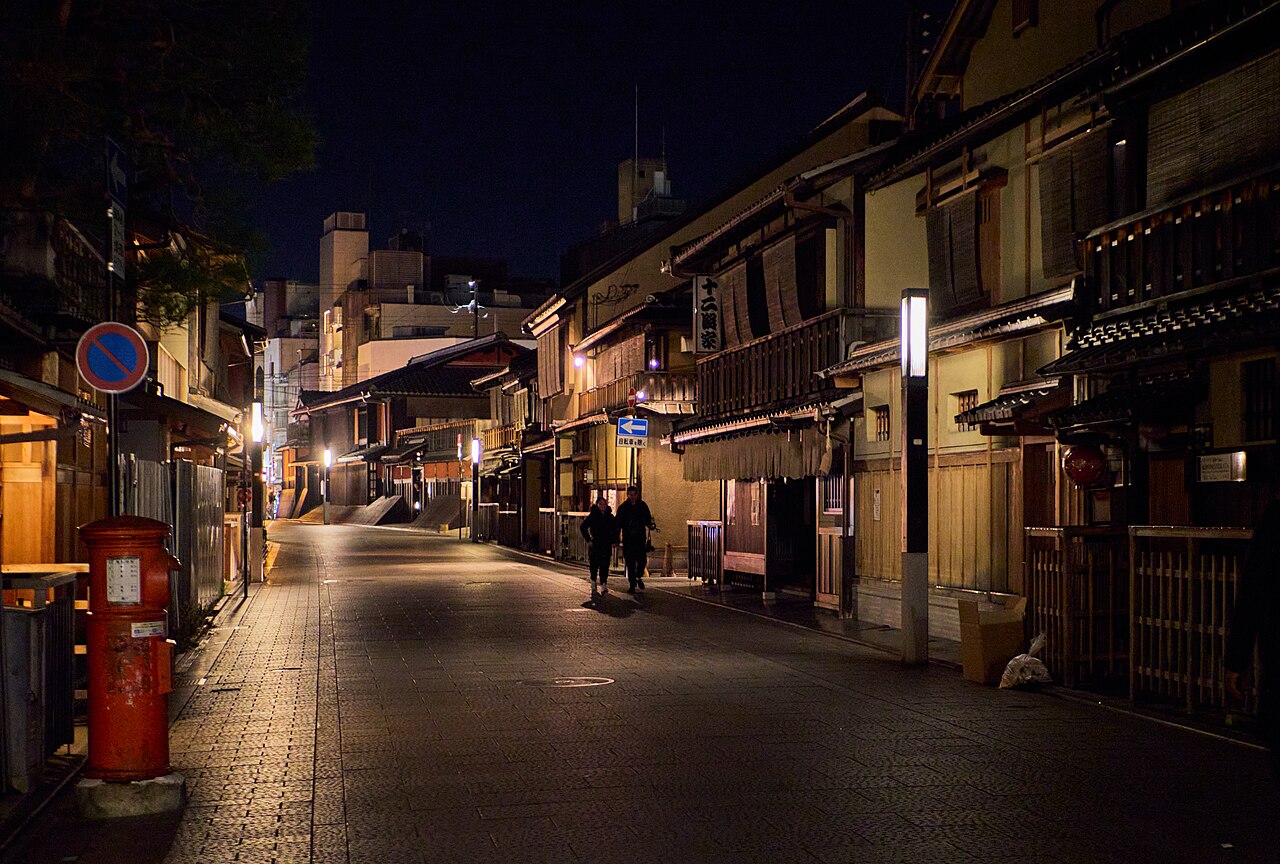
Key distinction: Hanamikoji-dori (the main street) is public — you can walk and photograph street scenery there. The side alleys are private property. The line between them is invisible to visitors, which is precisely why locals are frustrated.
good spot restricted / caution (zones are approximate — always follow on-site signs)
Map: © OpenStreetMap contributors
🗣️ THE HONNE — what locals actually say
We sampled public Japanese posts on X (via Yahoo! Realtime Search) mentioning Gion and tourists. From the posts discussing tourist behavior, the recurring themes:
| Theme | What it sounds like |
|---|---|
| Sneak photography (盗撮) | The single angriest topic — unauthorized close-up shots of maiko and of other tourists, including minors. Locals post warnings identifying repeat offenders. |
| Property damage | "A tourist broke the lantern in front of a house in Gion. These lanterns are part of tradition all over Japan. I want the police to actually arrest people for this." |
| Displacement | "I avoid Gion and Chion-in entirely — too many tourists." Kyoto residents describe no longer going to their own neighborhoods. |
| Tourist-price inflation | "Completely inbound-tourist pricing now." |
Methodology note: posts expressing hostility toward nationalities rather than behaviors were excluded from this aggregation. The anger you see above is directed at actions — which means it is entirely within your power to not be its target.
📊 By the numbers — the city's own survey. Kyoto runs an official annual survey of its residents on tourism. In the latest one (conducted autumn 2025; 2,745 valid responses): 70.6% of Kyoto residents say they are bothered by congestion in some tourist areas, and 56.3% say they are bothered by tourists' manner violations (Kyoto City survey results[EN] · full report PDF, Japanese). In other words, the frustration in the posts above is not a loud minority — it's the documented majority mood of the city you're visiting.
🤔 THE WHY — how it got this way
Gion is not a theme park — it is a working, residential neighborhood. The women in kimono you see at dusk are mostly maiko and geiko commuting to work appointments, not performers posing for visitors. The narrow alleys south of Hanamikoji are private property owned by the teahouses and residents, the same way a private driveway is.
The escalation — polite signs (2016), a photography fine (2019), then "do not enter" (2024) — happened because each softer measure failed: tourists entered private entryways, blocked alleys so residents couldn't leave their own homes, and pulled at maiko's kimono sleeves (Kansai TV[EN]). The fine is the neighborhood's last resort to stay livable.
✅ THE MOVE — do this instead
- Photograph on Hanamikoji main street and Shirakawa-minami-dori — both public, both beautiful, especially early morning.
- If you see a maiko: let her pass. No chasing, no blocking, no selfie requests. She is late for work.
- Want a guaranteed maiko photo? Book a legitimate photo session or attend a public performance (Gion Corner) — that's what they exist for.
- Treat every alley as private unless it's obviously a major street. When unsure, don't enter.
- Go before 9am. Locals' single most common positive tip for Gion: the district at dawn is the version worth traveling for.
Sources: Kyoto City — resident survey on tourism[EN] · Kyoto City — Code of Conduct for Kyoto Tourism[EN] · Kyoto City Tourism Association — manner campaigns[EN] · Kansai TV (2024-03)[EN] · Kansai TV (2024-05)[EN] · Travel Voice (2024-03)[EN] · Bengo4 News[EN] · Local voices: public X posts via Yahoo! Realtime Search, 2026-08-20. Rules verified against primary reporting; last updated 2026-08-21.
Suggest the next place — or make this page better
Spotted something outdated? Know a place I should cover? Tell me below — it opens right here, no account needed. Every report is verified before publishing.